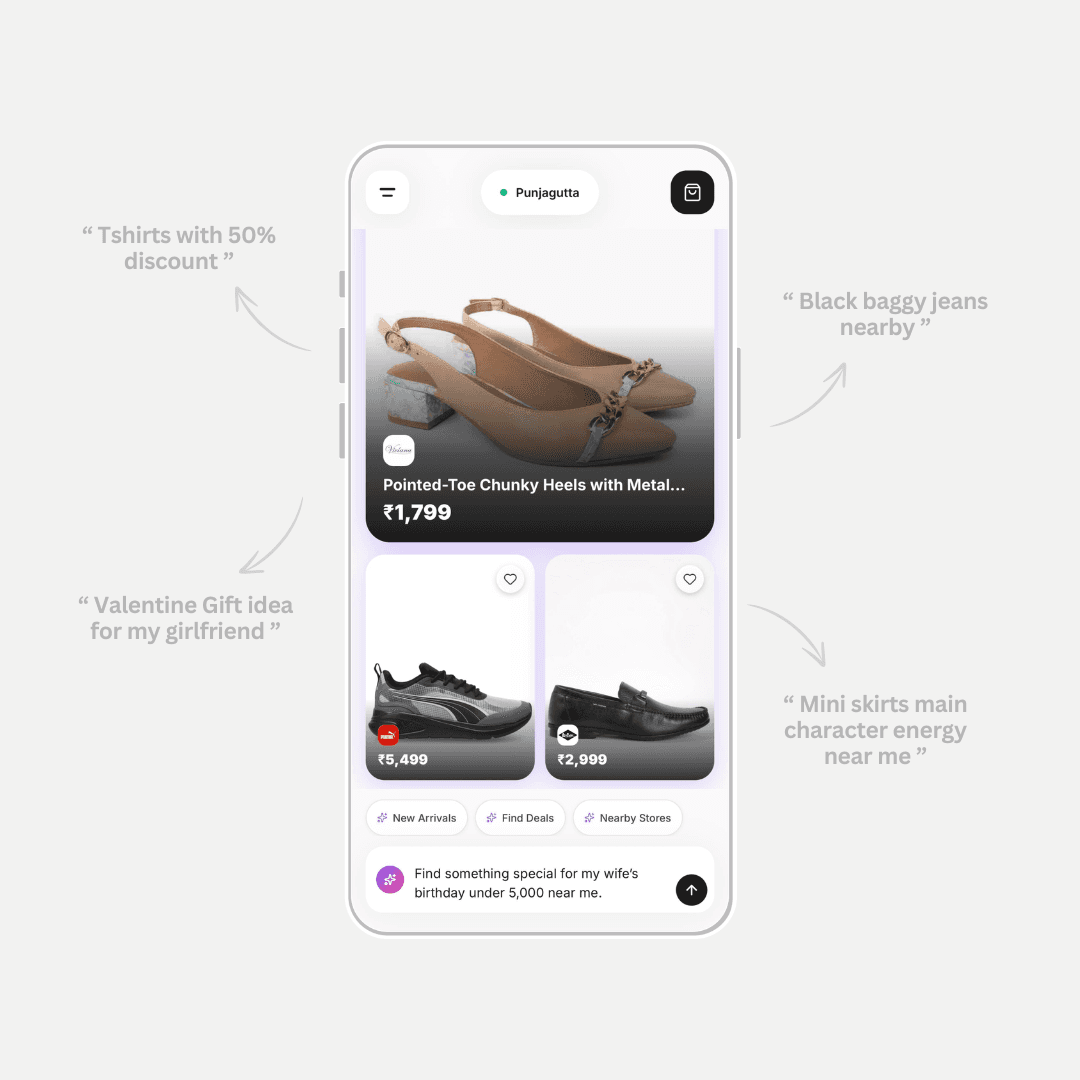
UONEX AI is a conversational shopping platform built for Indian malls, targeting Gen Z. It changes how people find products in physical retail, not with a better filter system, but by letting shoppers just say what they want
I was the founding designer. No design team, no handoff templates, no existing system to build on. Everything from the first user flow to the in-mall QR signage came from this role.
The core problem was simple and stubborn: malls have everything, but shoppers still leave empty-handed.
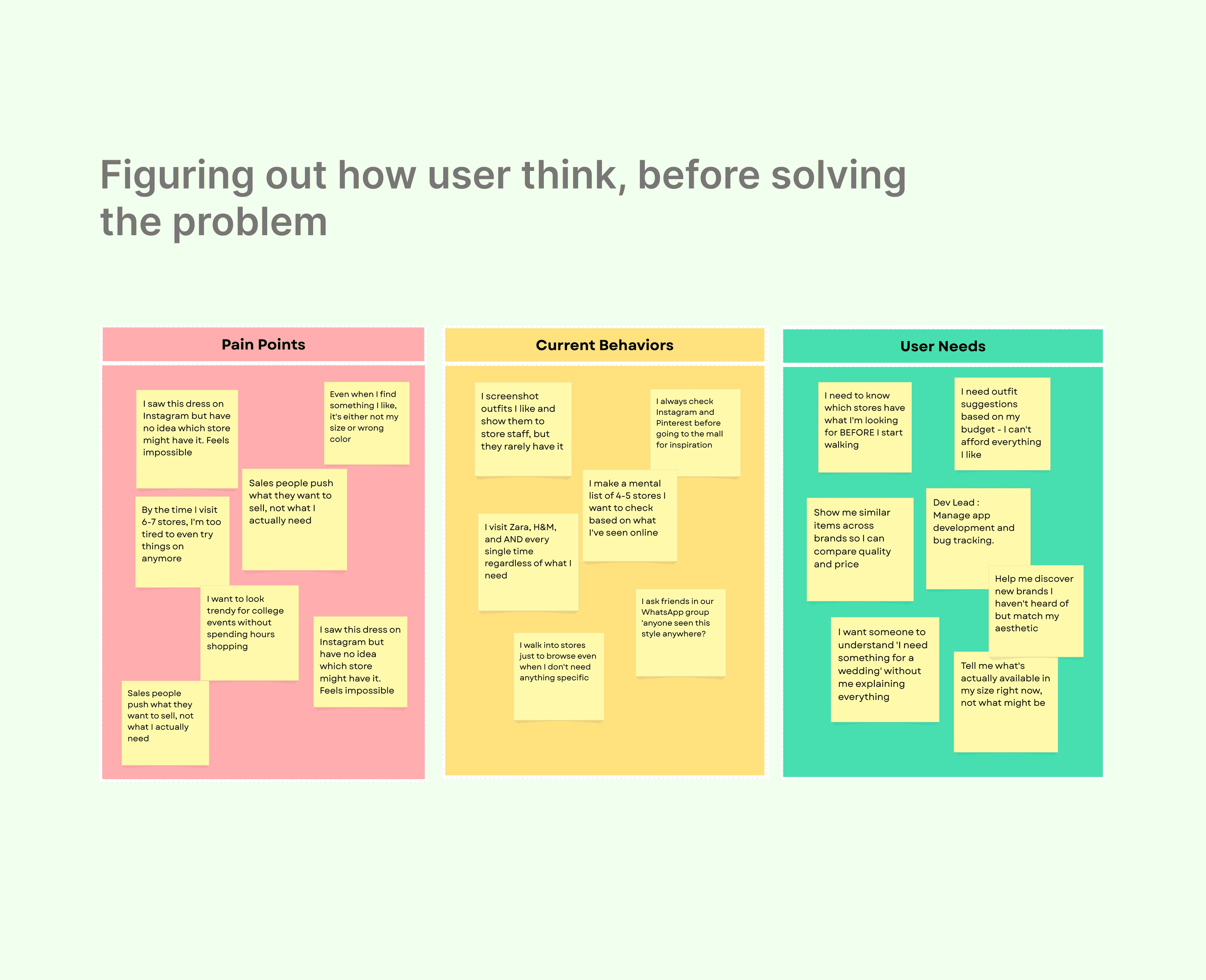
Gen Z shoppers in Indian malls face a real paradox, hundreds of stores, almost no way to find what you want quickly. Discovery meant relying on memory, luck, or flagging down store staff who may or may not know their own inventory.
I built a dual-world architecture: an AI World for intent-driven queries, a Browse World for open exploration. The goal was to match how people actually shop, not how a product team imagined they do. Same app, two modes, no behavior change required.
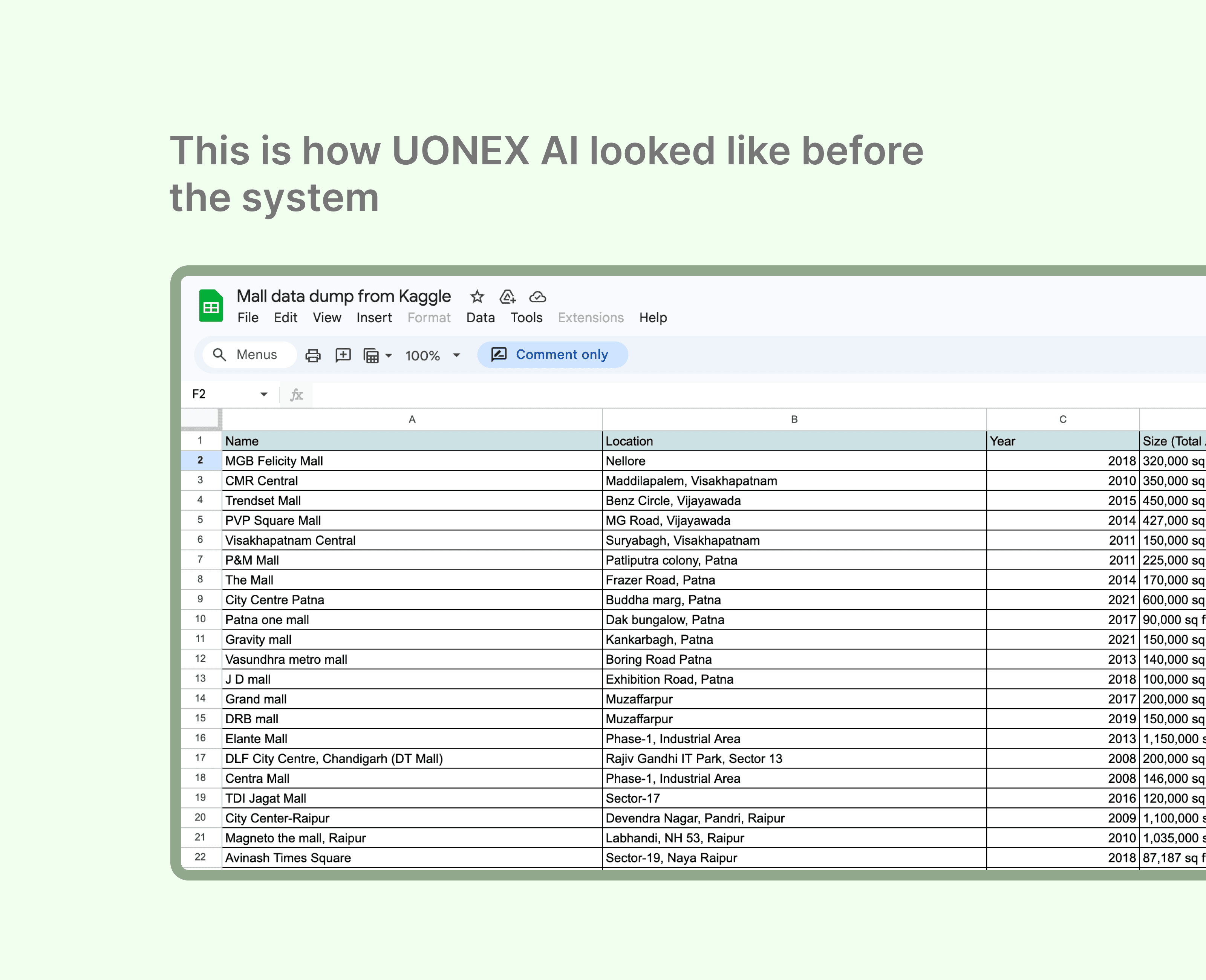
Malls host hundreds of stores. Shoppers still leave empty-handed.
There was no cross-store visibility, no way to describe what you wanted and get a real answer, no bridge between intent and location. Most apps solved this with a directory, which is just a digital version of the same problem.
I focused on cutting average product search time by 60%. Not by adding better filters, but by letting shoppers talk to the app the way they'd talk to a friend who knows every store in the building.
The secondary issue: when shoppers can't find something in two minutes, they don't try harder. They leave. I needed to move the drop-off point from "gave up" to "bought it."
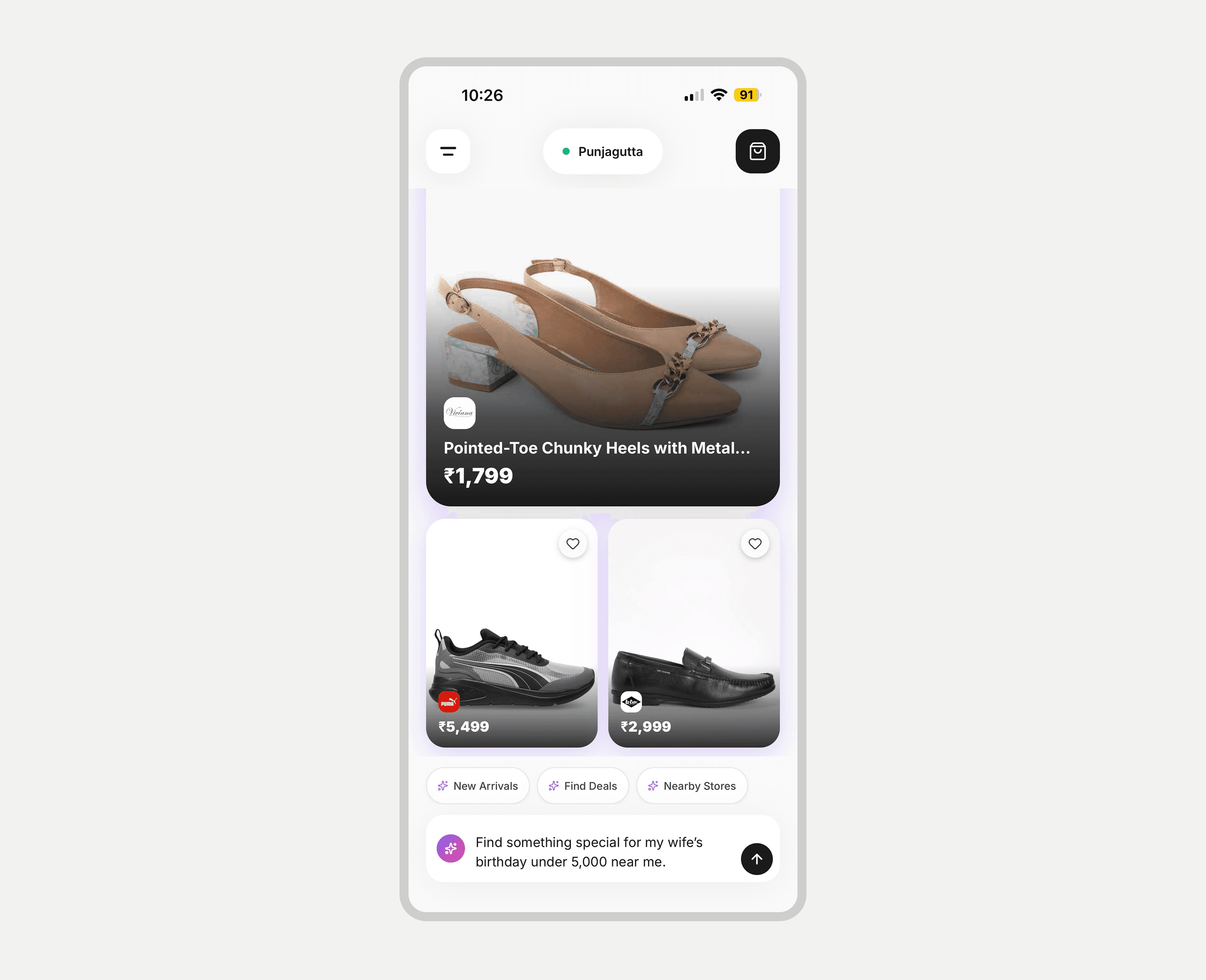
The interface uses a familiar chat format, shoppers describe products in their own words, slang included. During a busy mall visit, nobody wants to learn a new app. They want an answer.
I built the AI to understand natural language the way Gen Z actually uses it, not formal search syntax. That shift made the product feel less like a search engine and more like texting someone who actually knows.
Onboarding was built around demonstration, not explanation. New users saw the AI do something useful in their first 30 seconds, no feature tour, just an actual result. That cut onboarding time by 40% and stopped users from bouncing before they hit any value.
Mall shopping for Gen Z is social and exploratory, but it still follows intent. Most failed purchases happen because the product was somewhere in that mall, and nobody knew where.
Multiple stores carry overlapping categories. Without a unified search layer, shoppers hit the same friction over and over: "Is it worth checking one more store?" Usually the answer becomes no.
I built the full discovery journey from first query to product location to physical store as one continuous thread. No dead ends. No "try a different search." The system either has an answer, or it says so clearly.
01 / 04
Shoppers used to touch 3–7 stores before finding what they came for. Sometimes more.
I redesigned discovery around a single conversational exchange. Type what you want, the way you'd say it out loud. The system reads intent, searches every store in the mall, returns ranked results with exact locations.
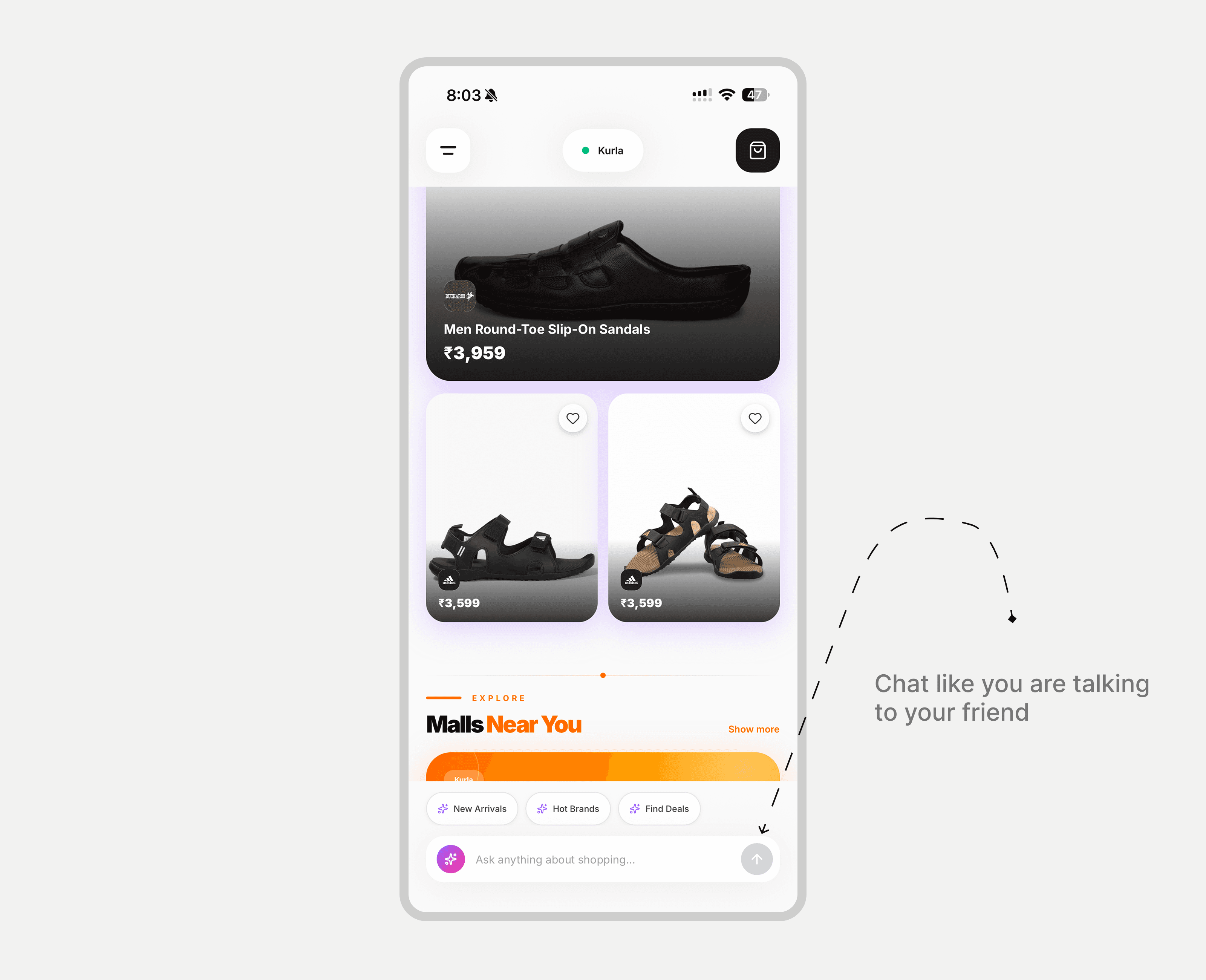
Search time dropped 60%. Not because the algorithm was smarter, because we stopped making users speak algorithm.
02 / 04
Most discovery apps pick a lane, search-first or browse-first and immediately alienate the users who aren't in that mode today.
AI World handles intent. Browse World handles wandering. Both sit in the same app. Users move between them without friction, without noticing a switch.
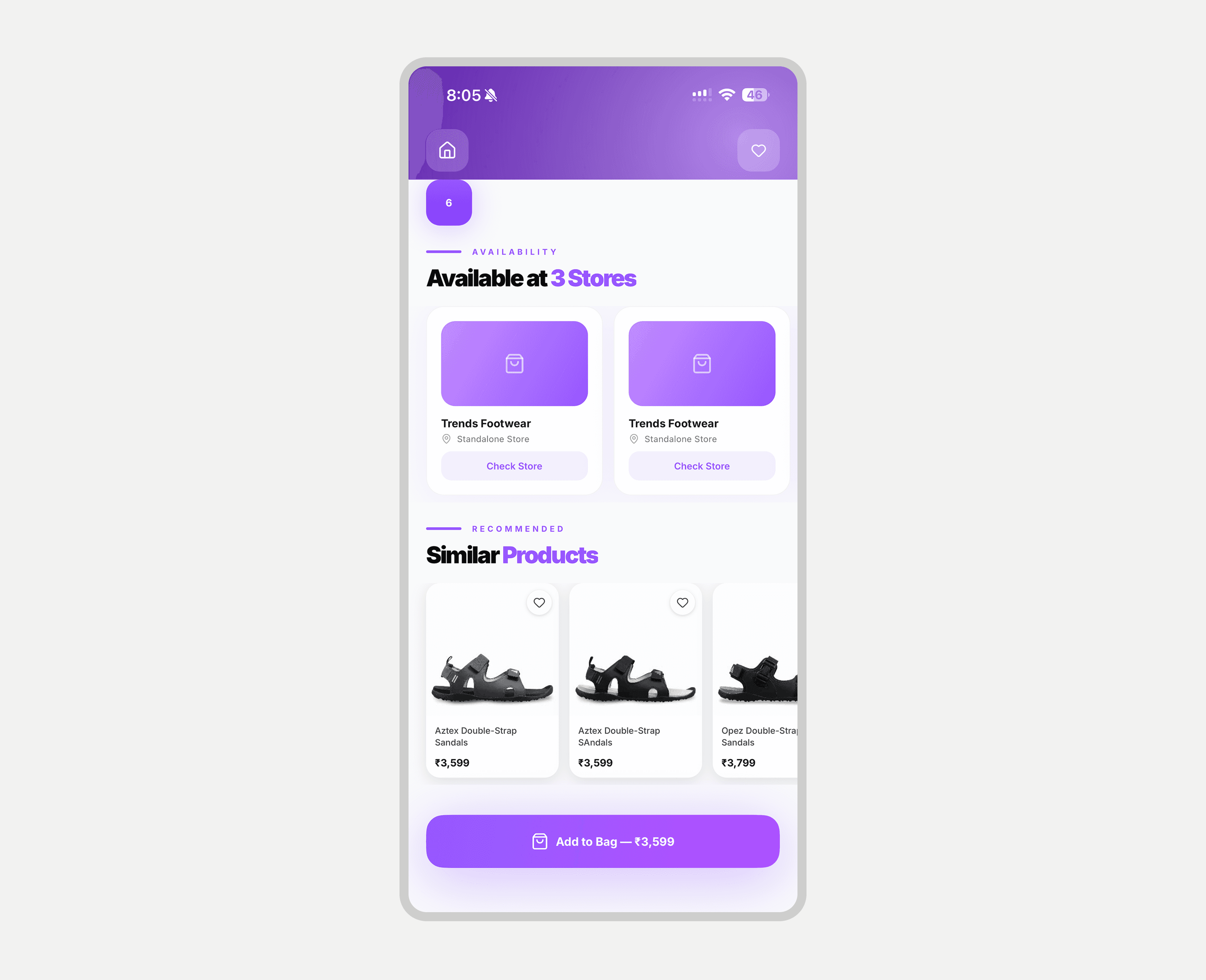
Session engagement went up. Drop-off went down. Shoppers stopped leaving when the app's mode didn't match their headspace.
03 / 04
The drop-off was blunt: users opened the app, couldn't tell what it did, and closed it.
I rebuilt onboarding around one real query, not a feature explanation, an actual result. By the time setup finished, users had already used the core product. They didn't need to imagine it anymore.
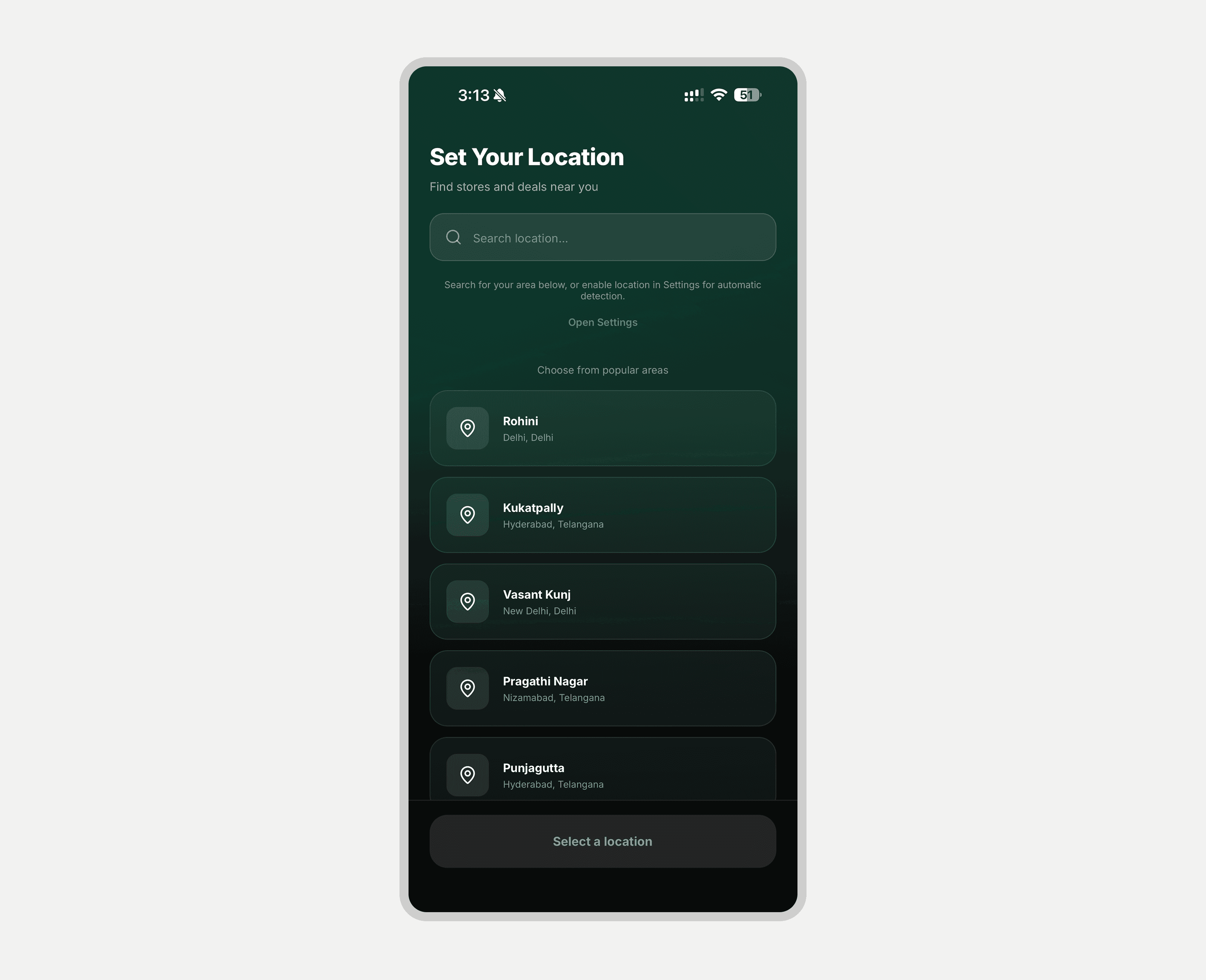
Onboarding time dropped 40%. The rate of users who completed their first successful search went up. That's the number that mattered.
04 / 04
I didn't stop at the screen. Store profiles were mapped to match how people navigate physically not how a database organizes inventory. Getting from "the AI found it" to "I'm standing in front of it" had to be frictionless.
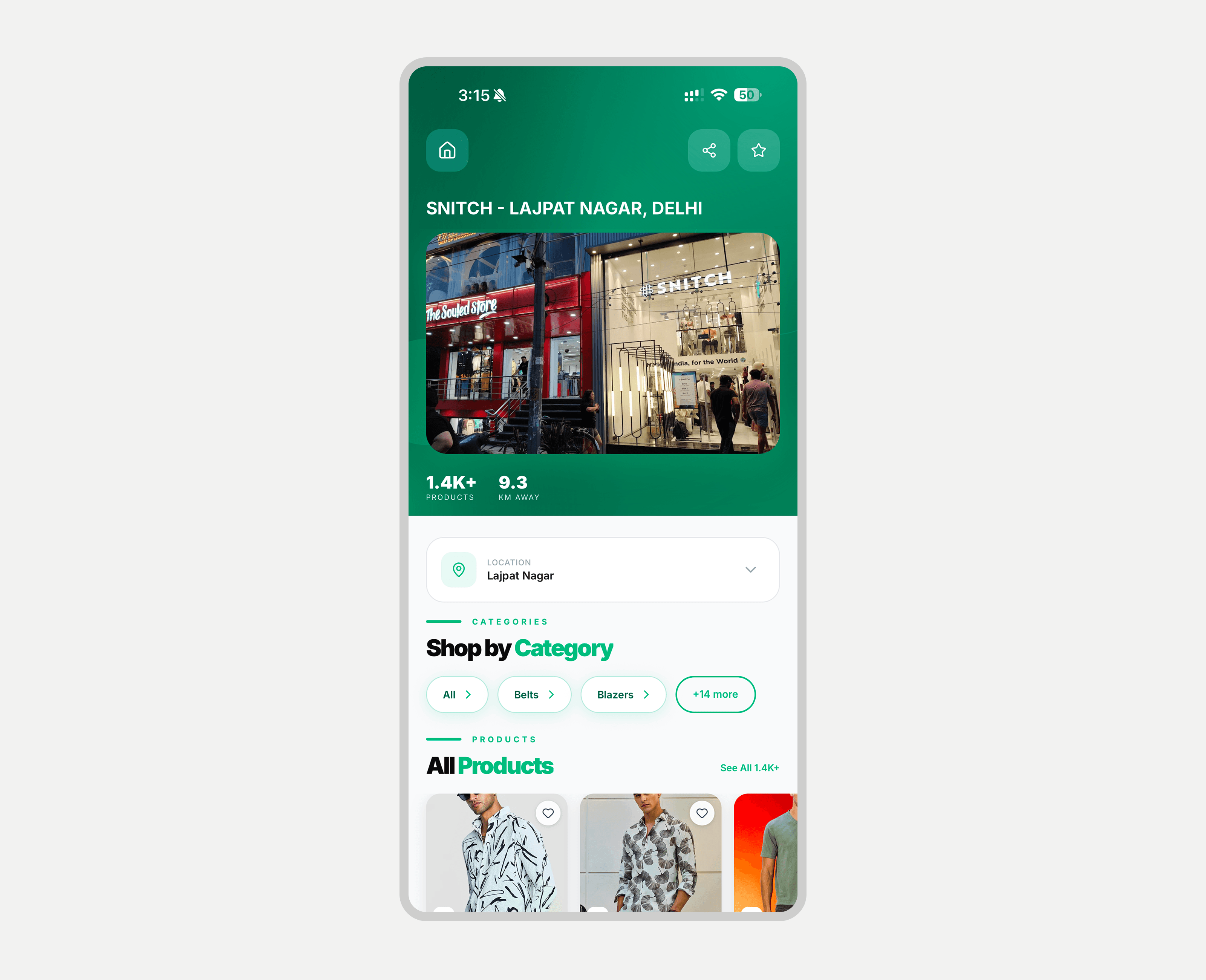
Store profiles surfaced real-time product availability alongside directions. After this, the gap between discovery and actually buying something narrowed. The app stopped being a search tool and started being a companion.
I also designed the full visual identity and marketing system for the Indian market launch, in-store QR signage, social content, a design language built around cultural resonance rather than generic app aesthetics.
In-mall placement drove organic downloads. The brand made sure the first impression was already working before anyone opened the app.
This project was about one question: what does it take to make a physical retail space feel intelligent?
The answer wasn't a smarter search bar. It was designing for how people actually move, talk, and decide and then building both the digital product and the physical context around that.
60% less search time was the stat. What it actually meant was that shoppers trusted the app enough to stop wandering.